Cradle to Cradle
2009
Mixed Media
Various dimensions
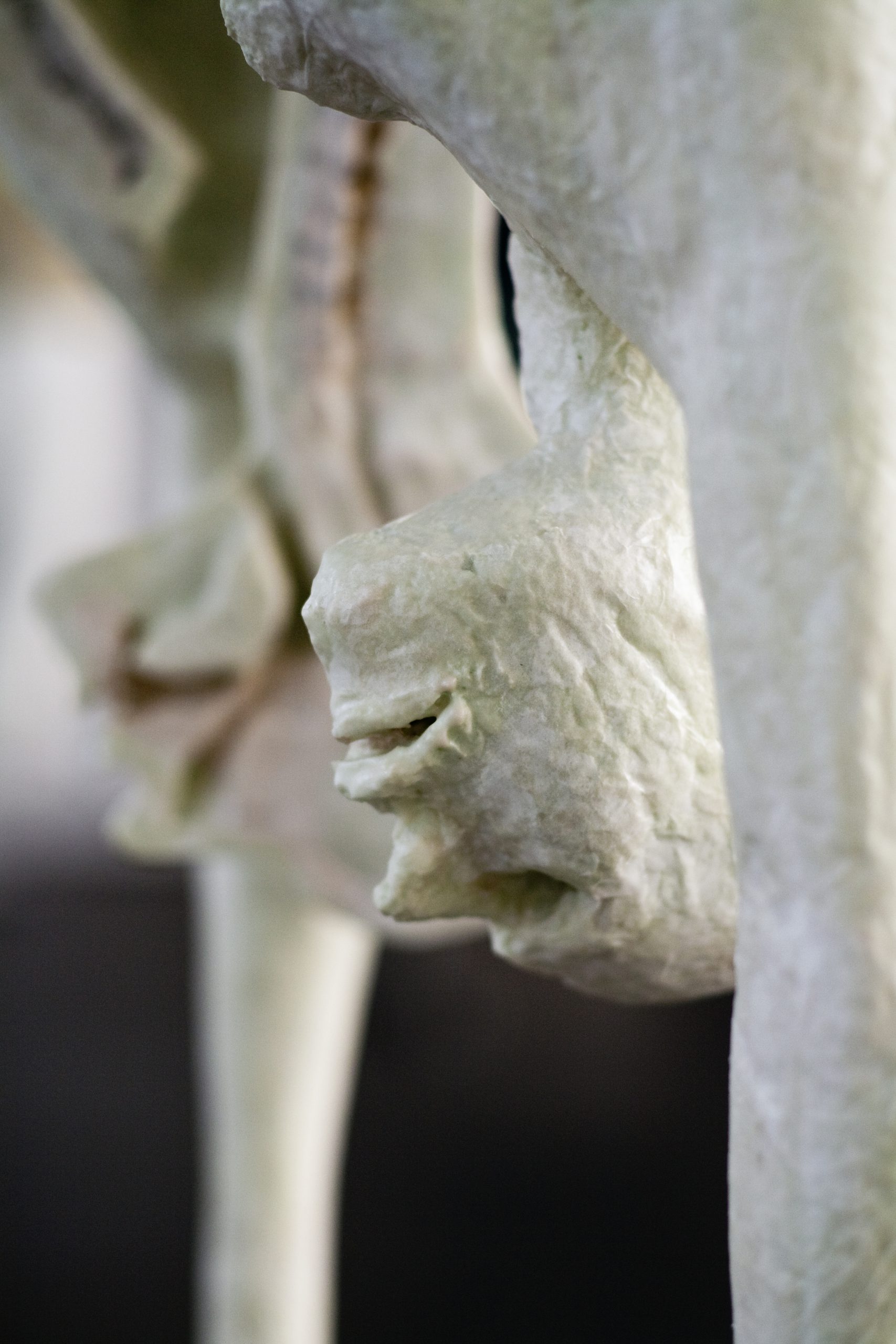
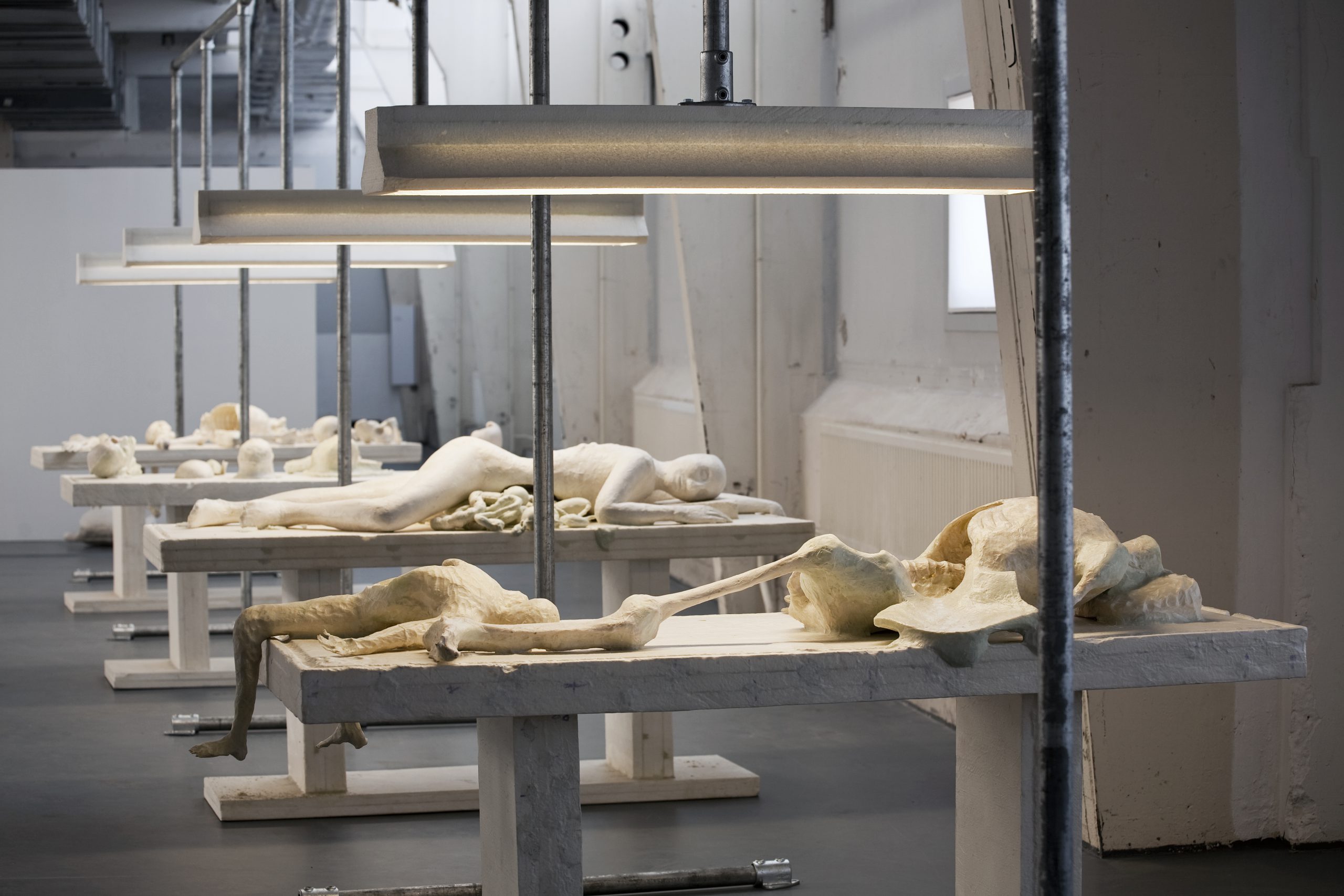
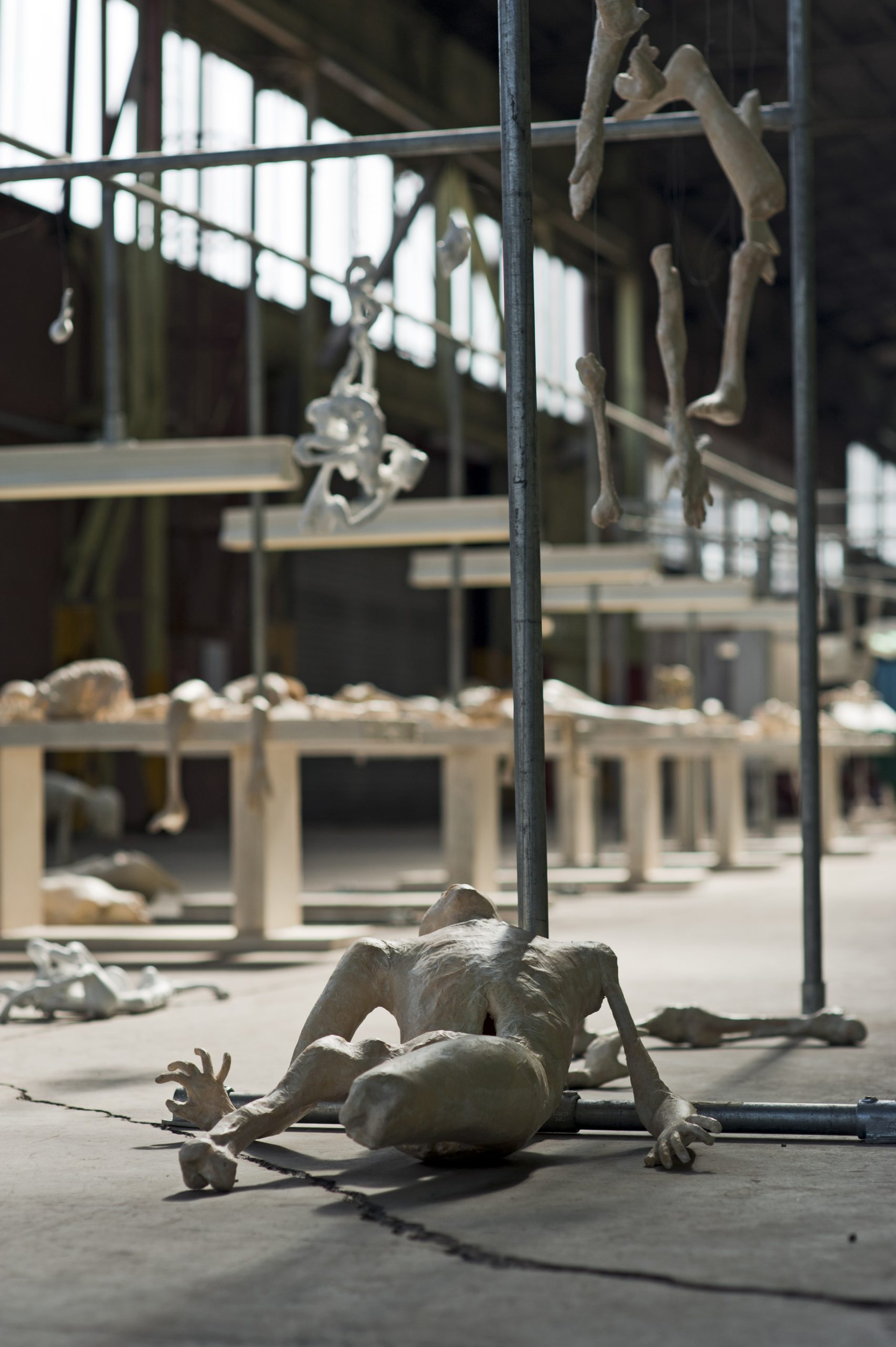
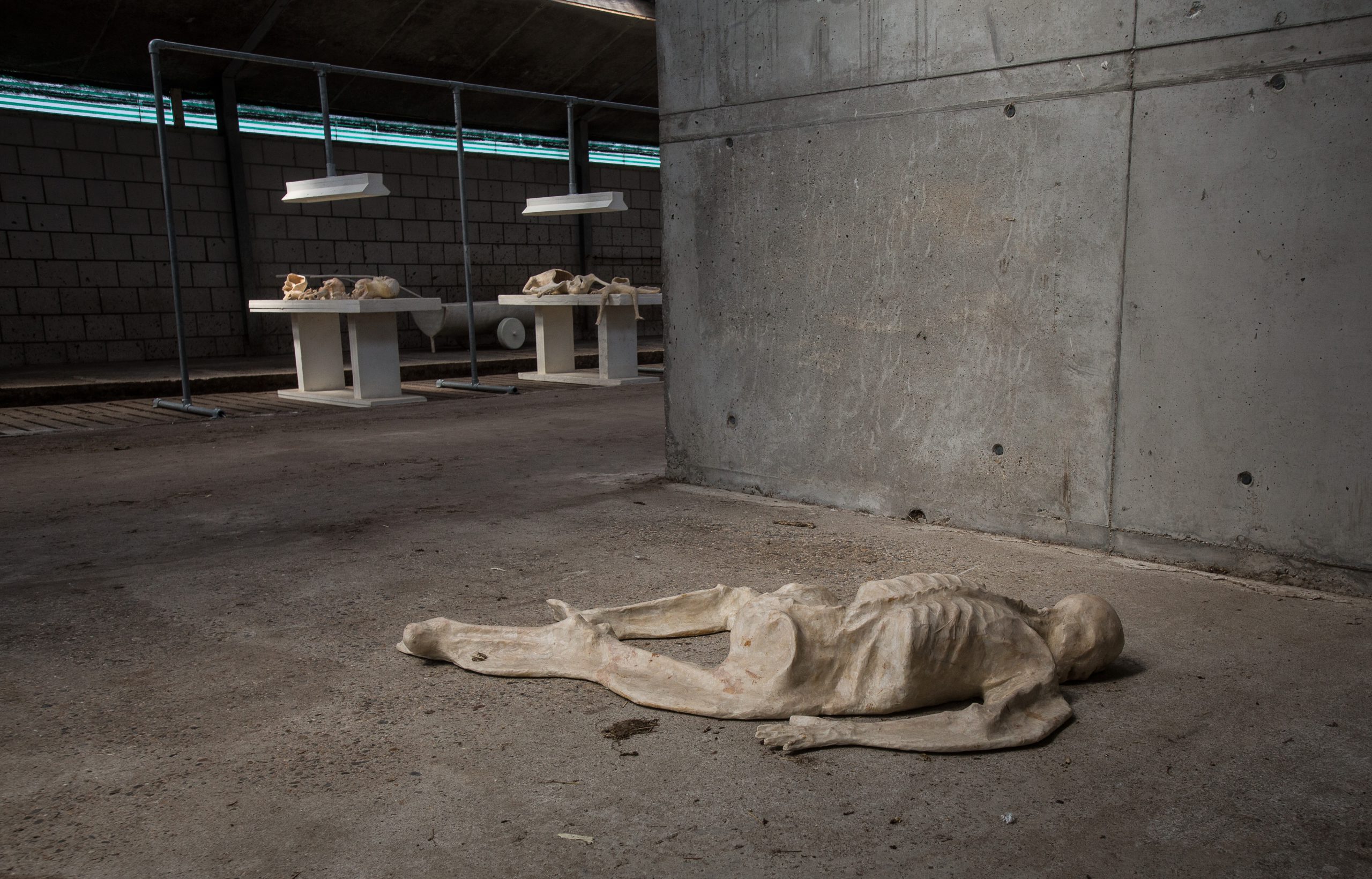
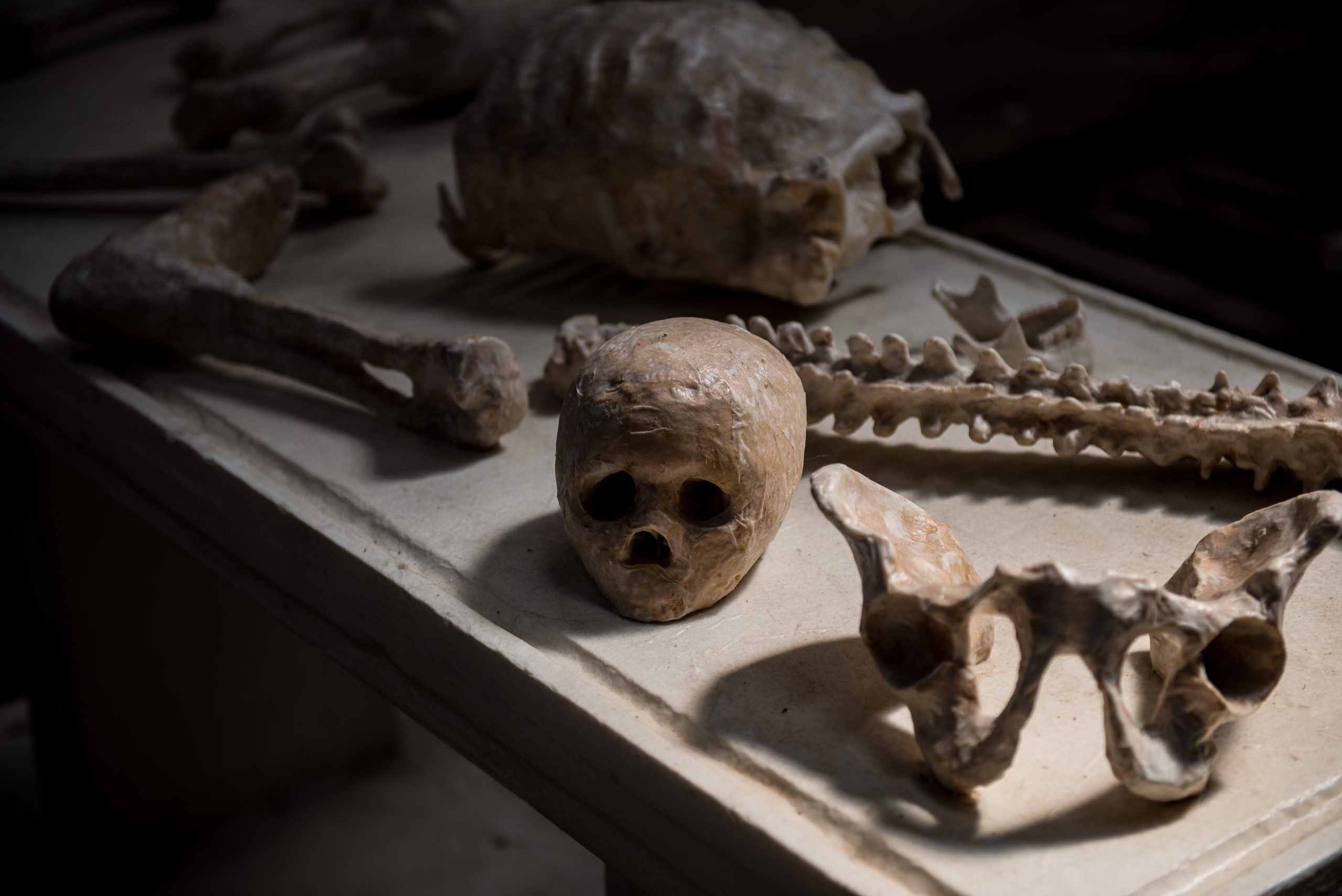
Joep van Lieshout’s fascination with systems and organs is apparent in his installation Cradle to Cradle (2009). This artwork takes its name from the popular Cradle to Cradle manifesto by the American architect William McDonough and the German chemist Michael Braungart. Cradle to Cradle is based on the concept that waste is food. This means that old materials are used to form new products without loss of quality or waste products. This principle is taken to the extreme in AVL’s installation. Cradle to Cradle consists of an anatomical theatre, a semi-industrial slaughterhouse and a high-tech operating room. Bones, skulls, muscle groups and organs lie on robust, brightly lit tables. Various flayed bodies hang from rails. This machine recycles people. In a model of efficiency, the organs are used for transplants, while the flesh, fluids, fat and bones are processed into meat. The remainder is used to harvest energy.
Cradle to Cradle includes part of the interior of another art work – SlaveCity – which Joep van Lieshout has been designing since 2005 and which is intended to house 200,000 residents. The infrastructure of SlaveCity has been fully worked out on paper and in models and objects, and includes universities, brothels, a hospital, an airport, a shopping centre, a call centre and a museum. SlaveCity’s potential residents are selected upon entry. AVL describes the selection process as follows: ‘Old, crippled, sick and bad tasting people will be recycled in a biogas digester, while the healthy, not so clever will be recycled in the meat processing factory. The young and healthy will take part in the organ transplant program.’ Only six per cent of all participants are suited to working in the call centre. The selected healthy slaves follow a strict schedule. They work seven hours per day in the service industry or on the land and seven hours in the call centre. They must spend the remaining ten hours on personal maintenance, relaxation and sleep. If all the slaves keep to this regime, SlaveCity is able to provide all its own food, water and energy. ‘The city’s only source of energy is that which it produces itself covered by the use of biogas, solar and wind energy, working to build a ‘cradle to cradle’ situation in which everything works as a closed circuit recycling system, where there is no waste.’ Moreover, the organisational structure of SlaveCity is highly profitable. The revenue is invested in medical assistance, organic food and green energy.
With macabre sculptures and installations such as Cradle to Cradle, AVL offers an extremely provocative answer to the world’s problems of overpopulation and depleted energy supplies. In addition, the art works hold up a mirror to society, magnifying contemporary trends in the fields of ecological (product) design and the economy. ‘[…] Cradle to Cradle is presented as a perversion of a highly modern achievement-oriented society, bringing forward the discussion of the broken limit between good and evil.’ The art work shows ‘the logical outcome – the shadowy other – of a ruling democratic system entangled in its own guiding principles of economic rationalisation and expanding biological control’, according to the theorist Helen Petrovsky in a catalogue from 2009.
Cradle to Cradle (2009) was part of the following exhibition(s):
‘SlaveCity’, De Pont, Tilburg (NL), 2016
‘Vrijstaat’, Kasteel Keukenhof, Lisse (NL), 2014
‘De Kannibaal’, Villa Zebra, Rotterdam (NL), 2011 – 2012
‘Infernopolis’, Submarinewharf, Rotterdam (NL), 2010
For enquiries: please contact Atelier Van Lieshout via info@ateliervanlieshout.com